


When I explain design systems to people who don’t work in design, I almost always reach for Lego. It’s the most recognizable design system in the world, even though nobody markets it that way. Every brick shares one interface, that grid of studs and tubes, and because that single connection point never changes, a two-year-old and a master builder can use the same parts to make wildly different things. The foundation is rigid on purpose, while the composition on top of it stays wide open. That tension between a strict shared base and enormous freedom above it is the whole idea, and it’s what makes Lego feel like infinite possibility rather than a box of constraints.
I’ve been making that same pitch about digital design systems for years. Lock the foundations — the tokens, the primitives, the rules about how things connect — and the teams building on top get more room to move, not less. The shared base is what makes the optionality safe.
Lego gets the foundations across, but when I want to talk about design language — the expressive layer, the part people actually feel — I reach for cars. When I teach this, I’ll put up simple shapes pulled from the faces of well-known cars: BMW’s headlights and the solid mass of the kidney grille, Jeep’s seven-slot grille flanked by round headlamps, the flat circles of an original Beetle’s headlights, that sort of thing, stripped down to a few primitives with no badges and no color. And almost every time, most of the room can name not just the brand but the specific model. A visual vocabulary systematized that thoroughly lets a handful of shapes stand in for the whole car, which is exactly what a design language is built to do.
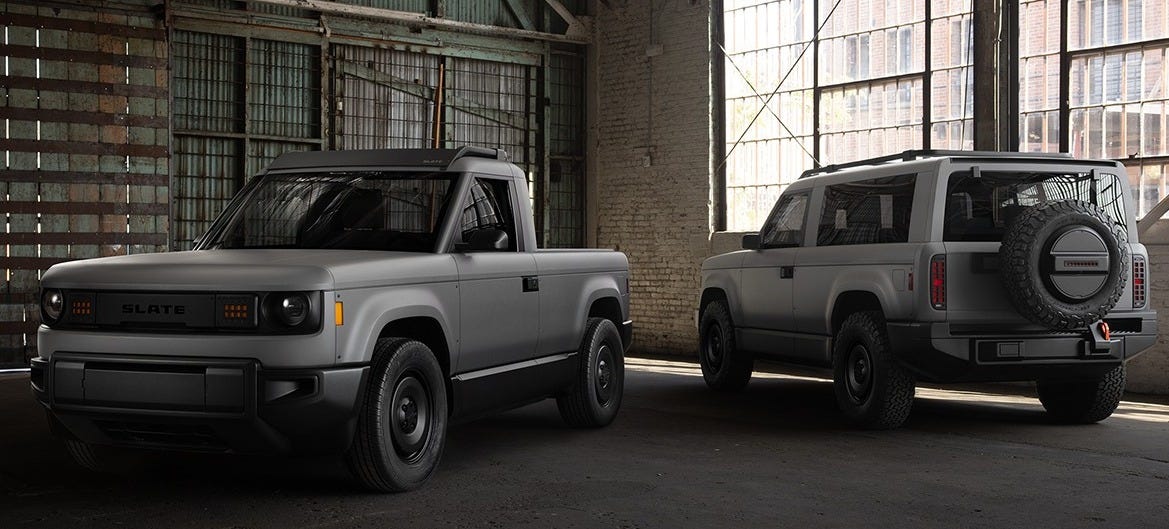
Car design is one of my biggest design fascinations, which is part of why the Slate truck has stuck in my head. In almost every other vehicle, the design language is the one layer the manufacturer holds onto for itself, the fixed signature you buy into and can’t really touch. Slate hands that layer to the customer. The expressive face of the truck becomes modular along with everything else, so a buyer can reshape it themselves, configuring the front accent lighting into a stylized, simplified sunset, say, rather than accepting whatever a studio decided the vehicle should look like years before it was built.
The cost savings get the attention, but the part that interests me most is that the design language itself becomes something the owner composes rather than something the brand hands down. It launched pre-orders this week, and it’s the most compelling of a small but growing group of physical products, laptops and phones among them, designed so that the thing you take home is a foundation rather than a finished, frozen object.
The Blank Slate
Slate Auto, the Bezos-backed EV startup that’s been building toward this, opened the order book on June 24 for a truck that starts at $24,950, the cheapest new truck you can buy in the United States right now. They’ve taken more than 180,000 early reservations, and first deliveries are targeted for the fourth quarter of this year. Those are real numbers for a company shipping its first vehicle, and I think the reason isn’t just the price.
The part that peaked my interest is that every Slate Truck coming off the line is exactly the same: a single-cab, two-seat pickup in unpainted gray, identical to the one behind it. The company literally calls the base configuration the “Blank Slate,” and they mean it: no trim ladder, no options matrix, no eighteen-month wait while the factory builds your specific spec. The truck is deliberately, almost aggressively, undifferentiated and visually boring when it ships.
If you’ve ever stood up a design system, that should sound familiar because it’s the same bet. The whole thing rides on shipping one solid, well-understood foundation that everyone starts from, then making the layer on top actually composable, rather than finishing and personalizing every unit before it leaves the building.
In design system terms, the customer stops being only a consumer of the component library and starts contributing to it, which is the part most digital design systems still struggle to pull off.
So what does composition look like on a truck? Slate plans to offer more than 200 accessories at launch, between their own “Slate Made” line and third-party partners: stereos, racks, lighting, suspension components, interior upgrades, exterior trim. More than 160 of those are priced under $500. These are the components. You add them at purchase or over years as your needs and budget change, and the foundation is built to accept all of them: a stable base with well-defined connection points, and a catalog of parts that snap into them without forcing you to re-engineer the whole vehicle.
The catalog isn’t the ceiling, either. Slate plans to open-source much of the ecosystem, with those hundred-plus attach points documented well enough that owners can 3D print their own accessories: running-light covers, dashboard badges, the small clip-on “Slatelets” people are already trading as STL files before a single truck has shipped. In system terms, the customer stops being only a consumer of the component library and starts contributing to it, which is the part most digital design systems still struggle to pull off.
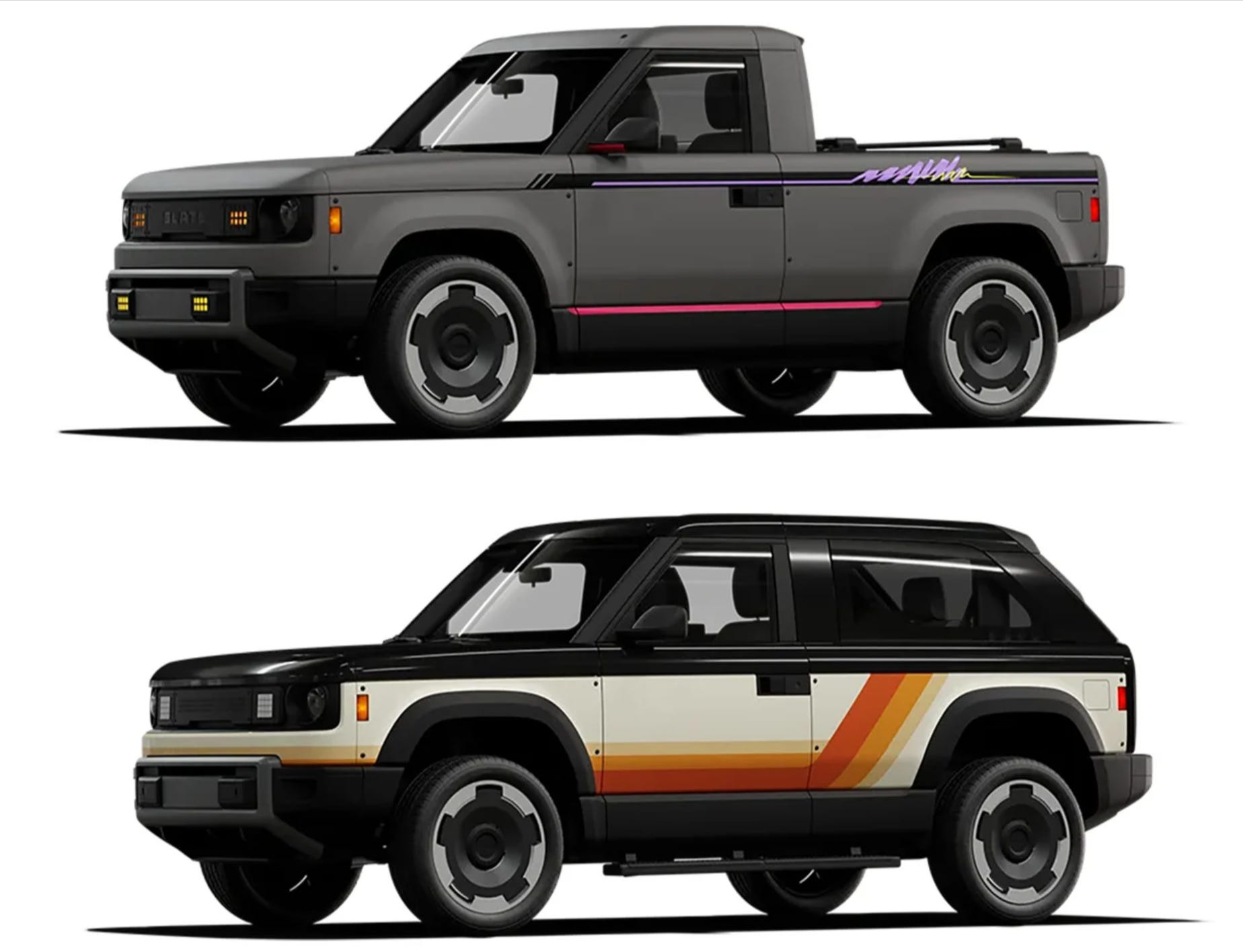
Then there’s the move that really maps directly to how we talk about design systems. The base truck isn’t locked into being a truck. For an extra $5,000 you can add the Squareback SUV kit and convert the two-seat pickup into a five-seat SUV, or $7,000 for the Fastback version, and you can convert it back. The foundation stays the same; what changes is the configuration of components on top, producing a fundamentally different vehicle for a different use case. In design system terms, the conversion is a pattern: a known, repeatable composition of primitives that solves a recognizable problem. The SUV is a documented arrangement of components sitting on the shared base, rather than a separate product line that had to be engineered from scratch.
The visual layer is where it gets almost too on-the-nose. Slate doesn’t paint its trucks. The gray is molded directly into the composite body panels, so there’s no paint shop, a big part of how they hit the low base price. Instead, the truck is designed to be wrapped: vinyl film, more than 100 colors and finishes at launch, full-body wraps under $500. One identical foundation, an enormous range of visual expression on top, swappable later for a few hundred dollars. If you’ve ever maintained a theming layer, you know exactly what that is: the structure underneath never moves, and the design tokens expressed on the surface — color, finish, the whole visual identity — are cheap to change and don’t touch the thing they sit on.
Slate didn’t arrive at this because they read a design-systems playbook. They arrived at it because it’s how you make a good, affordable, durable product when you take constraints seriously. The discipline at the base is what buys the freedom on top. I’ve been making this argument about software for years, and here it is bolted to a chassis.
The same bet, in computing
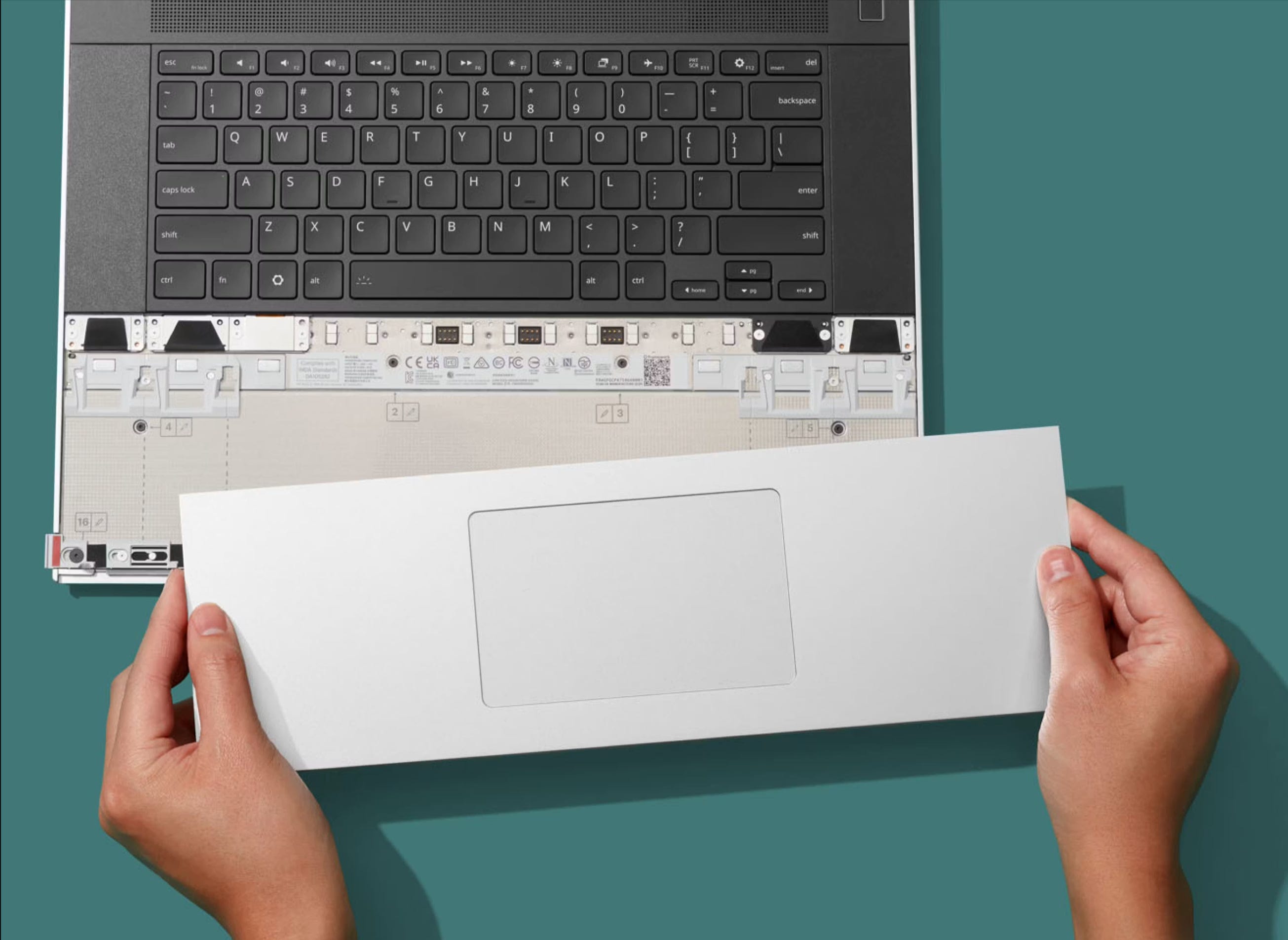
Slate isn’t alone as its clearest cousin is Framework, which has been running the same play in laptops for a few years. A Framework laptop is built to be opened, understood, and rebuilt. The ports aren’t fixed: they’re expansion cards you slot in and swap, so the same machine can be USB-C-heavy one week and carry HDMI and an SD reader the next. The mainboard is user-replaceable, and Framework sells it standalone, which means when you upgrade, your old board doesn’t become e-waste; people drop it into a separate case and turn it into a desktop. In 2025 the company extended the same philosophy into a proper desktop, with tool-free panels and the same modular I/O carried straight over from the laptops.
The strategy here is identical to Slate’s. Ship a strong, repairable, well-documented foundation, and make the layers above it — ports, storage, the mainboard itself — things the owner can compose and recompose over the life of the product. The laptop you buy is a starting point, not a sealed unit you replace wholesale when one part falls behind.
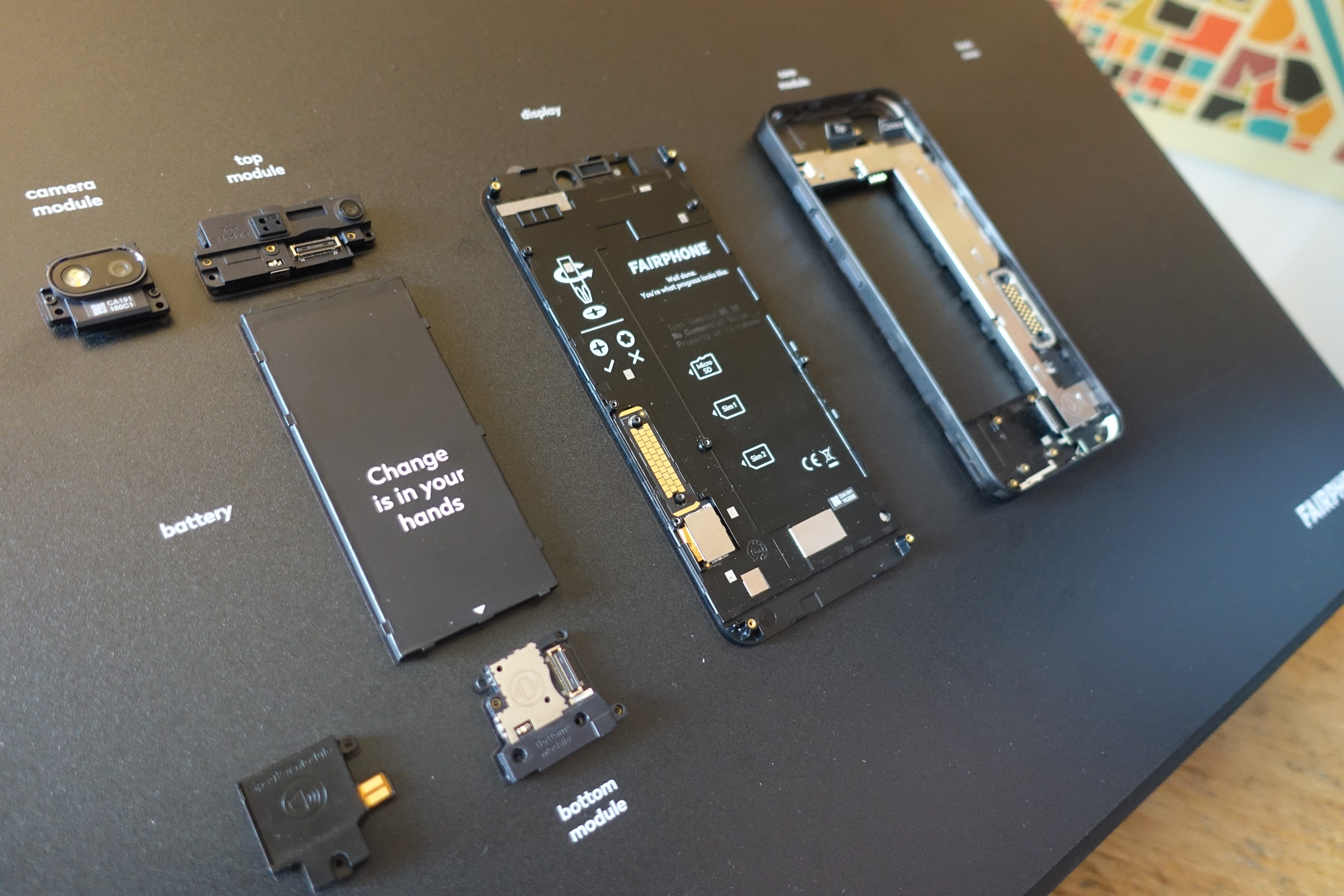
Fairphone (which I’ve written about before) is making the same argument but for your pocket. The Fairphone 6 splits into five replaceable module groups — battery, display, the top unit, the cameras and earpiece, and the loudspeaker-and-USB-C assembly — all reachable with a single screwdriver. A cracked screen or a tired battery becomes a five-minute component swap instead of a reason to buy a new phone. It’s a different category with the same structure underneath: a stable foundation, clear interfaces, and parts that come apart and go back together by design.
What the driveway is telling the design org
The thread running through Slate, Framework, and Fairphone is that the products that many people are excited about treat what they ship as a foundation rather than a finished, frozen artifact. The optionality is the appeal, and it’s only possible because the base is disciplined. Slate can offer 200 accessories and a truck-to-SUV conversion precisely because every truck starts identical. Framework can let you reconfigure ports and swap a mainboard because the interfaces are standardized and documented. Fairphone can turn a repair into a swap because the modules have clean boundaries. The freedom on top is paid for by the rigor underneath, every time.
That relationship is what I want more product and engineering teams to internalize when they think about their own design system. A good system lets consuming teams compose more, and do it faster and more safely. It’s the opposite of the constraint it usually gets mistaken for, because they’re not renegotiating the foundation every time they need something new. The same shared base that makes a Slate cheap to manufacture is what makes it endlessly configurable in the driveway. The same primitives that make a design system feel restrictive on day one are what make experience composition possible on day one hundred.
There’s something clarifying about seeing the idea rendered in steel and composite and vinyl, at a price built around constraints rather than in spite of them. We’ve spent years arguing about whether shared systems help or constrain the teams building on them. A two-seat truck you can wrap for $500 and turn into an SUV for $5,000 makes the answer feel obvious. Build the foundation well, and everything on top of it gets cheaper, faster, and more you.