



“What undid the beautiful ones was redundancy: they were surplus animals in a world that had run out of parts for them to play.”
In July 1968, a scientist named John B. Calhoun finished building a paradise and settled in to watch it die.
The paradise was for mice. Calhoun’s pen was a little over nine feet square, with sixteen mesh tunnels, hundreds of nesting boxes, and food and water that never ran out. He held the temperature steady, kept out predators, and sterilized the bedding against disease. Every physical need a mouse could have, he met; the only thing he withheld was more room, which left space as the single constraint. He called it Universe 25, his twenty-fifth run at the same experiment, and he was honest about the real subject. “I shall largely speak of mice,” he wrote, “but my thoughts are on man.”
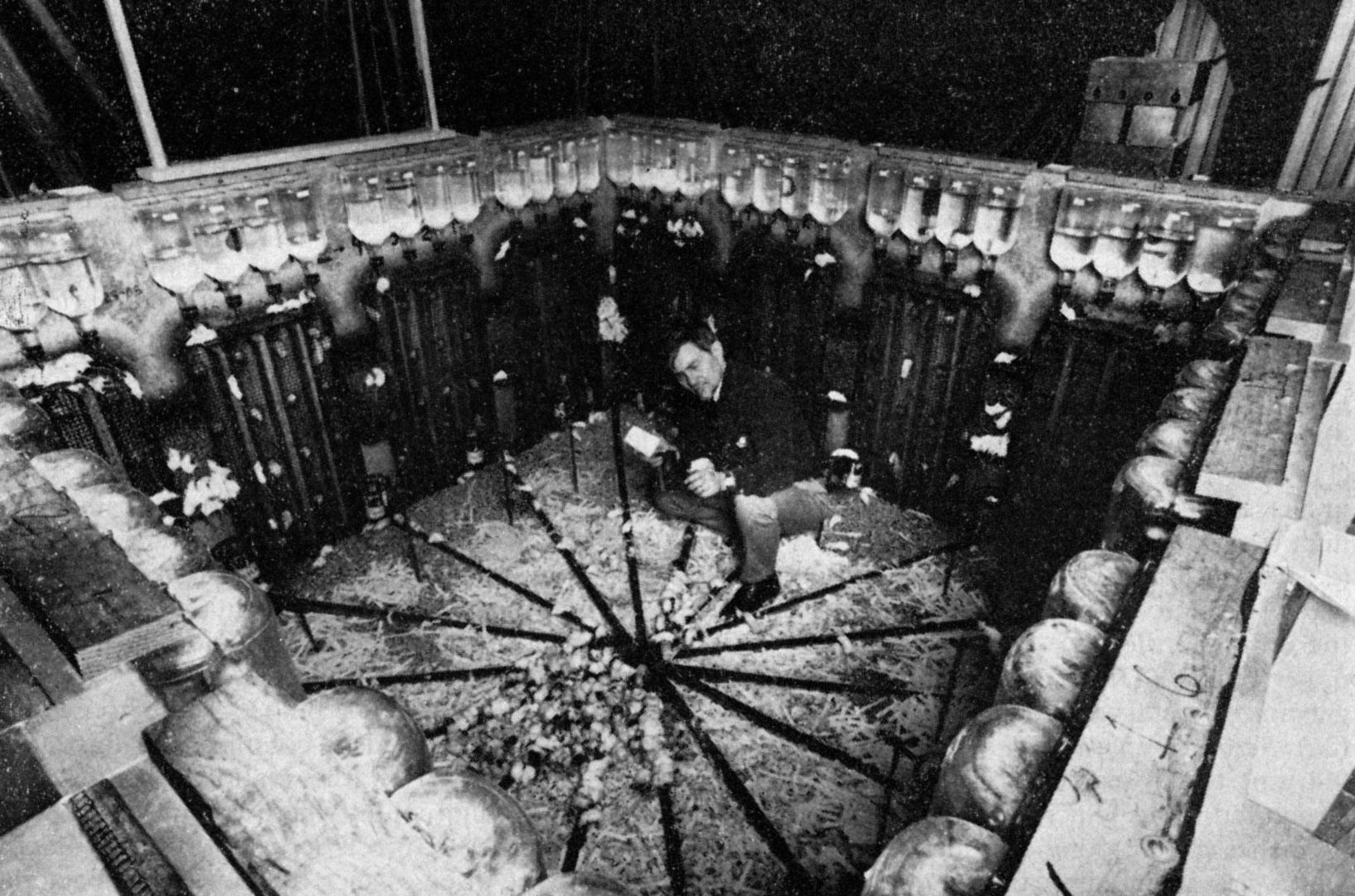
For a while the colony flourished, four breeding pairs becoming hundreds as the population doubled every two months. Then, past the three-hundred-day mark, with more than six hundred mice in a world built to hold thousands, the growth stalled and the strange behavior began.
Mice piled into a few crowded pens even though empty ones sat nearby, a compulsive clustering Calhoun named the “behavioral sink.” Males that could not win territory or status stopped trying to win anything at all, some turning violent while others simply checked out, and mothers abandoned their litters or attacked them. One group of young males withdrew entirely. They did not fight, did not court, did not compete; they ate, they slept, and they groomed themselves into a flawless sheen for the rest of their lives. Calhoun called them the beautiful ones, the healthiest-looking animals in the universe and the most useless to it.
Birth rates fell as infant mortality climbed toward total, and by the twenty-first month new pups rarely lasted a few days before they stopped coming at all. The population peaked around 2,200 and slid the whole way to zero. By the spring of 1973, less than five years in, mouse heaven was extinct. The food hoppers were full.
Universe 25 has spent fifty years as a warning: give a population everything, remove all hardship, and it will rot from the inside, because comfort kills and abundance is a trap. You might have seen it cited exactly this way, usually by someone who wants you alarmed about modern life.
The trouble is that the mice fell apart because the colony gave them nothing left to do. The scarce resource in Universe 25 was function. Food and water never ran short; roles did. As the colony filled up, it produced far more mice than it had positions for. A young male in a healthy mouse society has a job description: hold territory, court mates, climb the social order, defend the young. Calhoun’s paradise generated animals faster than positions, and the losers had nowhere to go and nothing to become, so they opted out. What undid the beautiful ones was redundancy: they were surplus animals in a world that had run out of parts for them to play.
That changes what the experiment is about. Universe 25 is really a story about what happens when a system keeps every creature alive but stops offering any of them a role worth playing. The comfort itself was fine; the problem was a society that had run out of ways for its members to matter. This is a useful lens to apply to ongoing arguments about artificial intelligence and our shared future.
The paradise we are being sold
“Somebody already gave a population most of what it wanted, and it did not obviously get better, and there are still so many with so very little.“
The pitch for an AI future is, at its core, a pitch for abundance. Intelligence becomes cheap, and cheap intelligence makes goods and services cheap, so that expertise that used to cost a fortune (a doctor, a lawyer, a tutor) becomes something you summon from your phone for pennies. The optimist’s version is genuinely beautiful: with survival handled, we climb Maslow’s ladder as a species, freed to make art, ask bigger questions, and care for each other more. It is the oldest dream we have.
The doomer’s version is the mirror image. If machines can do the cognitive work, human labor’s share of the economy shrinks, and with it the main channel through which most people have ever participated in economic life and built an identity. Commentators have started calling this the “ghost economy,” one that hums along producing enormous output while needing fewer and fewer people to run it. Strip away the survival pressure, the doomer asks, and what exactly are all these humans for?
You can see where this is heading: the doomer is describing Universe 25. Abundance arrives, struggle disappears, roles evaporate, and we become the beautiful ones, comfortable, well-fed, impeccably groomed, endlessly scrolling, quietly declining to participate.
The part the optimists tend to skip is that we don’t have a great track record with abundance. The most materially rich society in human history is also living through a documented epidemic of loneliness, anxiety, and a crisis of meaning. Somebody already gave a population most of what it wanted, and it did not obviously get better, and there are still so many with so very little.
But how realistic is any of this, really?
Before we panic about paradise, it is worth asking whether paradise is even on the schedule. Two things suggest it is not.
The first is that scarcity doesn’t vanish so much as migrate. Make one thing free and value relocates to whatever is still finite. Long-distance calls used to be a luxury and are now essentially free, and we didn’t enter a post-communication utopia; we just found new things to want. Even where goods and answers cost nothing, plenty stays scarce: land where people want to live, status, attention, trust, and, above all, time. The striving just moves up a level, and innovation itself becomes a job rather than the end of jobs.
The second is that abundance, if it comes, arrives owned. Cheap intelligence is not free intelligence, and the compute and infrastructure that produce it sit in a small number of hands. If output soars while the ordinary path to earning a living erodes, the returns pool where the ownership is. A serious strand of the debate warns this looks less like Star Trek and more like feudalism: a landlord class that owns the means of abundance and a population dependent on whatever access it is granted. That danger is real, and it is the opposite of the Universe 25 problem: instead of comfort spread evenly, you get scarcity re-imposed by concentration, and nobody goes soft in a world like that; they get squeezed at best and violent at worst.
Put those together and the pure mouse-utopia ending requires conditions we are unlikely to reach: total abundance, evenly distributed, every form of scarcity abolished at once. The apocalypse of comfort assumes a smoothness the human world has never once delivered, and likely never will.
Which is, strangely, the good news
If flawless, universally shared abundance is not actually coming, then the specific collapse the doomers fear is not coming either. Struggle isn’t going anywhere, the finite things will stay finite, and the work of distributing, deciding, building, and caring will still need doing. We were never in danger of running out of problems.
And this is where Universe 25, read correctly, stops being a prophecy and turns into something closer to instructions. The colony died from a structural failure: a society that kept every member alive while offering fewer and fewer of them a role worth playing. That should change what we are afraid of. Removing the grinding, survival-level struggle from human life is no loss to mourn; nobody’s dignity lives in the fear of missing rent, and ending it is one of the few unambiguously good things a technology can do. The real danger is narrower: that we let the machines strip out the roles without deliberately building new ones, and we end up like the colony, kept alive by a system that has quietly stopped needing us.
So it lands on us as a design brief, something we get to shape rather than a fate we inherit.
Meaning as a system output
We usually talk about meaning as something an individual finds, a private achievement of the well-adjusted. Universe 25 suggests it’s more honest to treat it as something a system produces or fails to produce. Call the beautiful ones weak-willed and you miss the point: they were structurally unemployed in the deepest sense, born into an order that generated no position for them. Change the structure and you change the mice.
The same is true for us. The question worth asking about the AI transition is concrete and buildable: as the old roles dissolve, is the society generating new ones fast enough, and distributing them widely enough, that most people have somewhere to matter? Some of those roles will be economic and some will not; the paycheck is not the only thing that assigns a person a place. Care, teaching, stewardship, community, creation, and the work of governing all this technology well are real functions a healthy system can generate in abundance. The failure mode has nothing to do with leisure; it looks like a world that produces plenty of goods and almost no positions, that offers almost no one a part to play. That is the outcome to design against, on purpose, with the same seriousness we bring to the models themselves.
The one lesson that survives the pop-culture flattening is simple: a society is only as alive as the roles it keeps creating. Comfort was never the villain.
We are about to have more abundance and less obligation than any generation before us. Whether that becomes a golden age or a very comfortable extinction is a choice about what we build on top of the technology, not something written into it, and it stays, stubbornly and reassuringly, human.
The mice never got a say in the design of their universe.
We do.